
The Cottages Edge shares practical, down-to-earth guidance on uk cottage living, renovation and rural retreats for readers across the UK.
- 0123456789
- Angle Bd Abdelmoumen & rue soumaya, Résidence
- [email protected]
The Cottages Edge shares practical, down-to-earth guidance on uk cottage living, renovation and rural retreats for readers across the UK.
 By James Whitaker
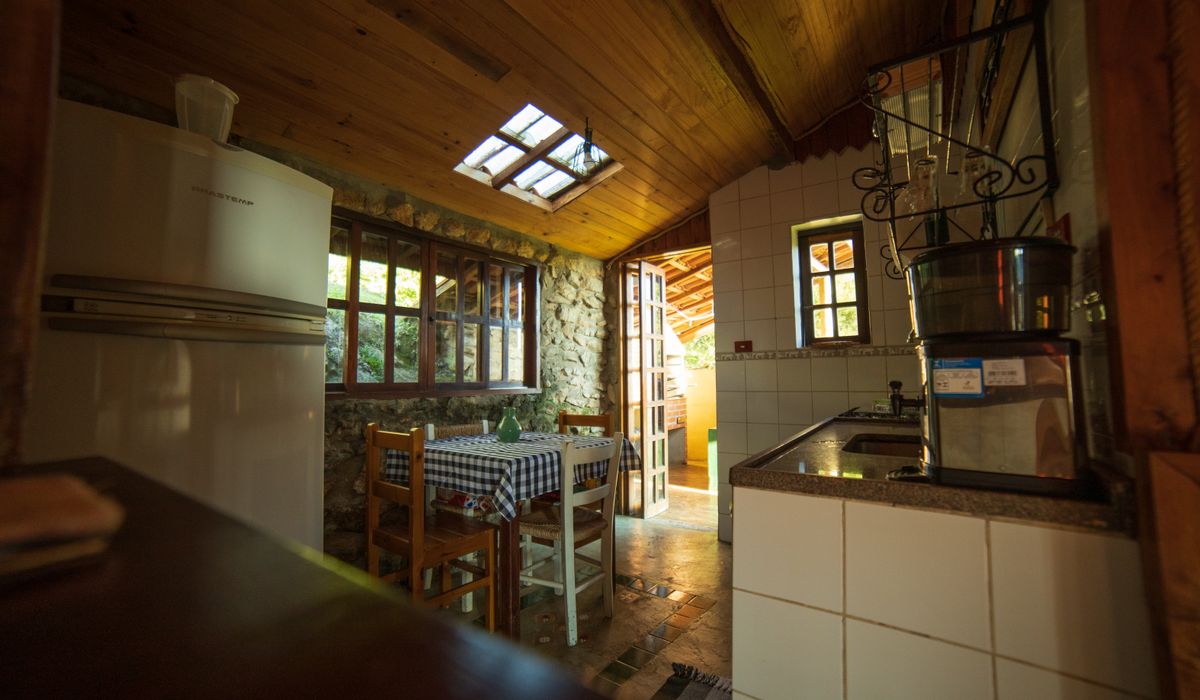
Most cottages built before the 1920s have no damp-proof course, no cavity, and floors that were never designed to be sealed. A solid floor is usually just flags or bricks bedded in earth, sometimes with a layer of ash or rubble beneath. A suspended floor is timber boards on joists spanning a ventilated void, with airbricks set into the external walls to keep a slow current of air moving underneath. Either way, moisture is expected to pass through the building and evaporate, not to be stopped.
That is why the wrong flooring choice so often shows up as a problem somewhere else. Water that cannot escape downwards or through the floor will find the walls, the skirtings, the joist ends or the plaster. In a period property, the floor is part of a system, and the materials you lay should work with it rather than against it.
Stone, brick, clay, lime and timber are all hygroscopic — they take up moisture vapour when the air is damp and release it again when conditions dry out. Laid and finished sympathetically, they buffer a room rather than trap it. A quarry tile floor in a cold pantry or a pine board floor in a low-ceilinged bedroom will behave very differently from a sealed surface, and not only in looks.
Breathability is not about leaving everything loose and draughty. It is about choosing materials that can dry in both directions, and finishes that let vapour pass instead of locking it in.
Reclaimed quarry tiles, brick pammets, terracotta and limestone flags are the traditional answer for halls, kitchens, pantries and sculleries. Look for thicknesses of 25–40mm for tiles and more for flags, and lay them on a sand or lime mortar bed rather than cement. Point with a lime mortar matched in colour and strength to the surrounding material — a hard cement pointing will crack, hold water and pull away from soft bricks and tiles.
A stone floor is cold underfoot for much of the year, so plan for rugs and accept the character that comes with it.
For suspended floors, reclaimed pine, elm and oak boards — ideally wide, tongued or simply butted and nailed — are ideal. Before laying, check the void beneath: airbricks must be clear, sleeper walls sound, and joist ends not buried in damp masonry. Improving ventilation under the floor is often the single most useful job you can do, and it costs very little.
Finish with linseed oil, beeswax polish or soap, all of which allow the boards to move and dry. Fill the gaps between boards with slivers of matching timber, twisted rope or a weak lime mix; silicone and plastic fillers trap water and look wrong within a season. Where boards meet a stone floor, a simple timber threshold strip works better than a sealed plastic trim.
Sealed modern options cause most of the trouble in period cottages. Be cautious with:
Each of these traps moisture rather than managing it. The water then moves sideways into the walls or upwards into joists, where rot and salts become far more expensive to fix than the floor ever was.
Expect seasonal movement. Timber will gap in the heating season and close again in the summer; stone will feel damp in humid weather and dry out once the air moves. Keep gutters, downpipes and external ground levels in good order, clear the airbricks each autumn, and use gentle background ventilation rather than sealing everything up. Underfloor heating can be made to work with stone or brick, but it needs careful design and is rarely wise over a suspended timber floor.
Chosen well, a breathable floor settles into the rhythm of an old cottage. It is rarely perfectly flat or perfectly warm, but it dries, it lasts, and it suits the building it sits in.


We are not gonna make spamming
